Which Arduino to Buy? Part 2 (Arduino MASTERCLASS)
Arduino MASTERCLASS | Which Arduino to Buy? PART 2
A transcript of this lesson:
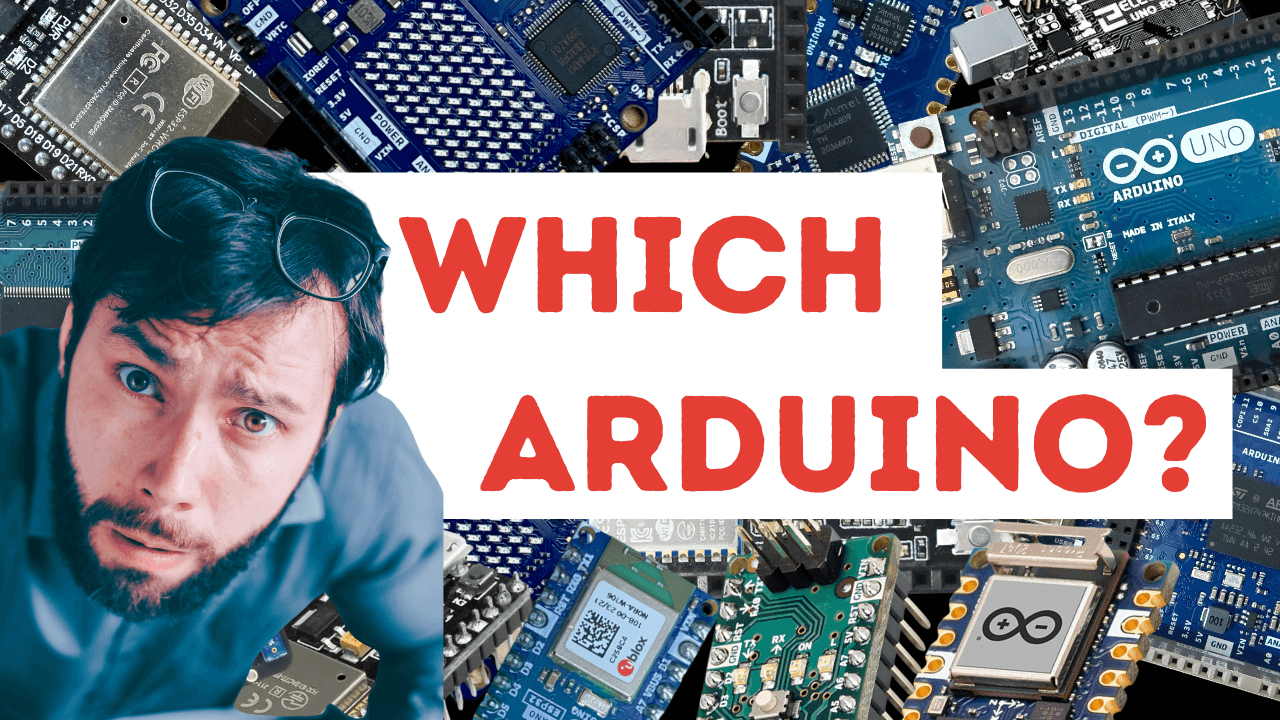
All right, so you need to go buy an Arduino board but there are a ton of options. Which one or ones are you supposed to go buy? To complicate things further, there’s a ton of boards out there that see Arduino compatible. What does that even mean? Are they gonna work with the Arduino IDE in the Arduino code? Well, in this lesson, you’re gonna find out exactly which Arduino to go buy if you’re just getting started. You’ll also learn what the term Arduino compatible really means and why. I’ll also tell you about a fantastic Arduino simulator to get started if you don’t have your board yet, or you just wanna kind of test out the waters. Let’s go. Before we start, if you could please take a moment and subscribe to our channel if you haven’t already, it doesn’t cost you but a click but it really helps bring us the best content like this Arduino workshop. Thanks a ton, I appreciate it. Okay, if you have not yet bought an Arduino board, I would recommend buying an Arduino UNO Rev 3. If you already have an Arduino board and it’s not an UNO, don’t worry about it, it’s probably gonna work just fine and we’ll talk about why in a moment. So why do I recommend buying an Arduino UNO Rev 3? Well, here’s the deal. The Arduino UNO is the best board for getting started with Arduino. It’s not the best board for all applications but when you are learning to use the Arduino hardware, the Arduino IDE, and the code all at once, then sticking with your Arduino UNO is gonna be your path of least resistance and here’s why. It’s super popular so you’re gonna find tons of code out there and training specifically for it. It has 20 different general purpose input/output pins called GPIO, for reading inputs and controlling outputs and this is plenty pins for most applications. Plus, the board layout itself is kind of the standard that’s used by most Arduino accessories called shields. The only real annoying thing about the Arduino UNO is that you’ll need a type AB USB cable, like the kind you use with lots of printers to connect it to your computer. So if you don’t have one yet, go get an Arduino UNO Rev 3 and I would recommend for your first one actually getting it from the Arduino website. It’s a great way to support the Arduino organization. This video is sponsored by NextPCB. For $0, you can get a 1-4 layer PCB. That’s right $0 for a PCB Prototype for the first order. NextPCB is currently offering a price reduction of up to 40% on their 4-layer PCBs, you can order now. Plus, if you’re a new customer, you can get $100 coupon for free just by signing up. You can upload a Gerber file, and when you do that it will fill in all this information for you and that also allows you to use the Gerber viewer. That’s $0 for a PCB Prototype. You can use the link below to register and get that price reduction of up to 40% on their 4-layer PCBs, you can order now. Oh, crud but wait, I already bought Arduino and it’s not an Arduino UNO Rev 3, I got a mega or a nano, or this thing that doesn’t even say Arduino on it but it sure looks like an Arduino UNO. Will these work? Well, here’s the good news. The chances are whatever boards you bought is probably gonna work just fine. And that is one of the amazing things about Arduino. And I wanna take just a quick second to explain something that alluded me for like ever but hopefully it’ll make sense to you. So Arduino is the name of a company. They started making Arduino boards and they made the Arduino IDE and they helped make the underlying Arduino language but everything they did was open source. So the hardware like the actual design of the board is open source hardware. And what that means is that anybody or company can use the exact same design and change it if they want to and start selling boards on their own. So that’s exactly what has happened and tons of people and companies have started selling boards that do the exact same thing as an Arduino board does, or sometimes they do additional things, many times they do additional interesting things. So the Arduino company and all types of other companies sell tons of different boards that all do slightly different things. Like think of a car company that sells different types of vehicles, maybe it sells a minivan or an SUV, sedans, or trucks. Each one serves a different use case, but for the most part they can all get you where you wanna go. But it’s not just the hardware that’s open source, it’s also the Arduino IDE. The Arduino IDE, again that’s the software that you use to program the Arduino, is totally open source and it’s actively developed and supported by the Arduino company and the Arduino community. But here’s what’s crazy. The Arduino IDE will work with these other company’s boards just fine. So any board that you get that says it’s Arduino compatible will very likely work just fine with your Arduino IDE, but here’s what’s even crazier, all the code that you write for one board is in most cases, going to work fine on another board with maybe some slight modifications. So if you wrote code for your Arduino UNO but later wanna switch it to a smaller form factor like an Arduino nano, it’s not like you need to rewrite all of your code. At most, you might need to adjust a couple lines of code and you’re gonna be ready to roll. Okay, I know that was actually quite a bit there. Hopefully, you’ve kind of got a bigger picture of what Arduino compatible actually means. And again, I recommend getting yourself an Arduino UNO R3 if you’re just getting started. Now, what if you don’t have any cash at all, like zero cash but you still wanna start playing around with Arduino. Well, you actually have a free simulator option. You can get access to a really nice free Arduino simulator at a website called tinkercad.com. Tinkercad is created by Autodesk and they have built a really nice Arduino simulator. So you can use an Arduino UNO board, you can build small circuits, test them, you can write code right inside the simulator. It’s pretty darn cool. A lot of people find they like it a ton. Now it does have some limits like you’re not gonna find all the different parts in there and there’s not a ton of different Arduino boards you can use, but for just getting started, it is a great place to go if you’re strapped for cash. If you hold an Arduino board in your hand and look at it, you might be wondering like what is all this stuff on this board? Well, that’s what we’re gonna talk about next. If you enjoyed this lesson, please like the video. I’d love if you’d subscribe to the channel, it really helps us bring you great content. And if you have any questions, please leave them in the comments. I know this is like a rapid lots of stuff coming out there. I’m leaving a lot out for the sake of time. So if you have a question, please just leave it in the comment. I will do my best to answer it for you. Thanks again to NextPCB for sponsoring this video, check the link in the description to get a price reduction of up to 40% for your Next 4-layer PCB. Now, like I said, the next thing you’re gonna learn is your way around an Arduino board, like what is all this stuff? You’ll also learn three ways to power most Arduino boards. I’ll see you then, bye.